The State of Digital in Westport, 2026: A Pharmacy Website That Weighs 11.6 MB and Three Photos That Explain Why
Two months of audits across the South Coast, 416 businesses, and one Westport pharmacy site measured this week at 34.4 seconds to put its main content on a phone screen. Nearly three quarters of that page is three photographs nobody resized.

Main Road through Westport is not a commercial strip. It is a road with a village on it. Pharmacies, flower shops, farm stands, the place that has cut somebody's hair for thirty years. These are businesses that survive on being known, and they are extremely good at it. The Westport florists I audited in August hold 1,197 Google reviews between them and average 4.91 stars. Not one is below 4.5. You cannot buy that. You earn it one customer at a time, over years, in a town small enough that the customer knows where you live.
That reputation is doing an enormous amount of work right now. On September 8, 2026, I measured a Westport pharmacy website with Google's own PageSpeed Insights, on a simulated mobile connection, five separate times. The median time to put its main content on the screen was 34.4 seconds.
The site is not neglected. That is the part worth sitting with.
What I measured, and what I did not#
This is a running project, not a one-off. Since July 2026 I have audited 416 businesses across 32 category-and-town combinations in Fall River, New Bedford, Dartmouth, Somerset, Swansea, Fairhaven, Westport, Tiverton and Providence. Every figure in this article is something I measured, not something I estimated. The two site measurements can be reproduced by anyone in a browser at pagespeed.web.dev; the archive totals are sums of earlier runs, and I have shown the denominator for every one of them so you can see what they are sums of.
Speed here means mobile Largest Contentful Paint via PageSpeed Insights: how long before the largest thing on the screen actually appears. Where Google has enough real traffic to report what actual visitors experienced over the trailing 28 days, I use that field data. Where it does not, I use the lab estimate and label it. Of 267 measurable sites in the archive, 65 carry real-visitor field data.
The 2.5-second threshold is Google's, not mine. I did not invent it and I am not grading on a curve I built.
Every business below is anonymised. These are real local firms that never asked to be graded in public. The point is not to embarrass anyone. The point is that you can run this exact test on your own site, free, in about two minutes, and I will show you how before the end.
The Westport pharmacy, in detail#
Site A is an independent pharmacy serving Westport customers. It has its own domain.
Here is what its site does right, and I want this on the record before anything else, because the list is longer than most:
- Valid mobile viewport tag, so phones render a phone layout rather than a shrunken desktop page
- A meta description, so Google is not writing the search snippet for them
- A tappable phone number
Pharmacystructured data, so Google is not guessing at what kind of business this is- Google Analytics (gtag.js) and Google Tag Manager, both present in the page
- HTML that arrives in 0.44 seconds, and weighs 28 KB
That is a better foundation than 57% of the sites in my archive, which have no structured data at all, and better than the 39% of live sites in the archive with no analytics installed of any kind. Somebody built this properly. Somebody is maintaining it.
And then there are three photographs on the homepage: 3,610 KB, 2,507 KB and 2,506 KB. Eight point four megabytes of images on a page that totals 11.6 MB.
That is the whole story. Not a bad developer, not a cheap platform, not an out-of-date CMS. Three pictures that went from a camera or a phone straight onto a webpage without anyone resizing them first.

The desktop numbers make the point sharper. On desktop, the same page scores 75 for performance and shows its main content in 3.7 seconds. On mobile it collapses to 34.4. The site is not broken. It is simply being asked to push 11.6 MB down a phone connection, and a phone connection will not have it.
For contrast, I measured a national chain pharmacy's store page for its Westport location the same afternoon. Call it Site B. It is 3.6 MB, scores 40 for performance, and shows its main content in 5.4 seconds. Six times faster than Site A, and still more than double Google's threshold. A corporation with a performance budget and a dedicated engineering team also fails this test. What separates the two is not skill. It is 8.4 MB of photographs.
The regional picture#
| Measure | Result | Denominator |
|---|---|---|
| Mobile LCP over Google's 2.5s "good" threshold | 211 sites (79.0%) | 267 measured |
| Mobile LCP rated "poor" (over 4.0s) | 171 sites | 267 measured |
| Median of the 31 per-run median load times | 6.8s | 31 category-town runs |
| Runs whose median site is actually "good" | 3 | of 31 |
| No website at all | 48 (12.9%) | 373 businesses |
| No way to book or order online | 209 (77.4%) | 270 live sites |
| No contact form | 139 (48.8%) | 285 live sites |
| No structured data | 163 (57.2%) | 285 live sites |
| No tappable phone number | 81 (28.4%) | 285 live sites |
| No analytics installed | 106 (39.3%) | 270 live sites |
| Phone number on the site does not match Google | 47 (22.0%) | 214 checkable |
Three of thirty-one category-town runs have a median site that meets Google's bar. Three. The Westport florists came in at a 12.0-second median, with eleven of twelve over the threshold and the slowest at 28.6 seconds.
The last row of that table is the one that quietly costs the most money. Twenty-two percent of the businesses where I could check both had a phone number on their own website that did not match the number on their Google listing. That is not a speed problem. That is a customer looking at two different numbers for the same business and having to guess which one is current.
Why this is not a technical argument#
The reflex when someone hands a small business owner a performance score is to explain caching, or bundle size, or server response time. That is almost never the problem here, and it is almost never worth what it costs to fix.
The problem is that a modern phone camera produces a multi-megabyte file, website builders accept a multi-megabyte file without complaint, and nothing anywhere in that chain tells you that you have just made your homepage unusable for anyone standing in a parking lot with two bars.
With all that the web offers, users can (and will!) try other websites if they get frustrated with yours.
In Westport that risk is dampened by something a spreadsheet cannot see. If you have filled a family's prescriptions for twenty years, they will wait out a slow page, because they are not really visiting a website, they are checking your hours. Reputation buys patience.
It does not buy it from the family that moved to Westport in June and searched "pharmacy near me" for the first time last Tuesday. They have no history with you. They have a thumb, three results, and no reason to wait 34 seconds for the second one.

The fix you can do yourself, today, for nothing#
This is the free one. Budget half an hour the first time you do it, less every time after, and it is the single highest-return thing most businesses in this archive could do to their website this month.
Step 1. Find out if this is your problem. Go to pagespeed.web.dev, paste in your homepage, choose Mobile, and wait. Scroll to "Largest Contentful Paint." If it is over 2.5 seconds, keep reading. Then scroll further to the section that lists your page's largest files. If images are sitting at the top of that list at over 500 KB each, you have found it. Cost: nothing. Time: two minutes.
Step 2. Resize the offenders. Go to squoosh.app. It is free, made by Google's Chrome team, requires no account, and does the work inside your browser, so your photos never leave your computer. Drag a photo in. On the right, set the format to WebP and quality to about 75. Under Resize, tick it on and set the width to 1600 pixels. Download the result.
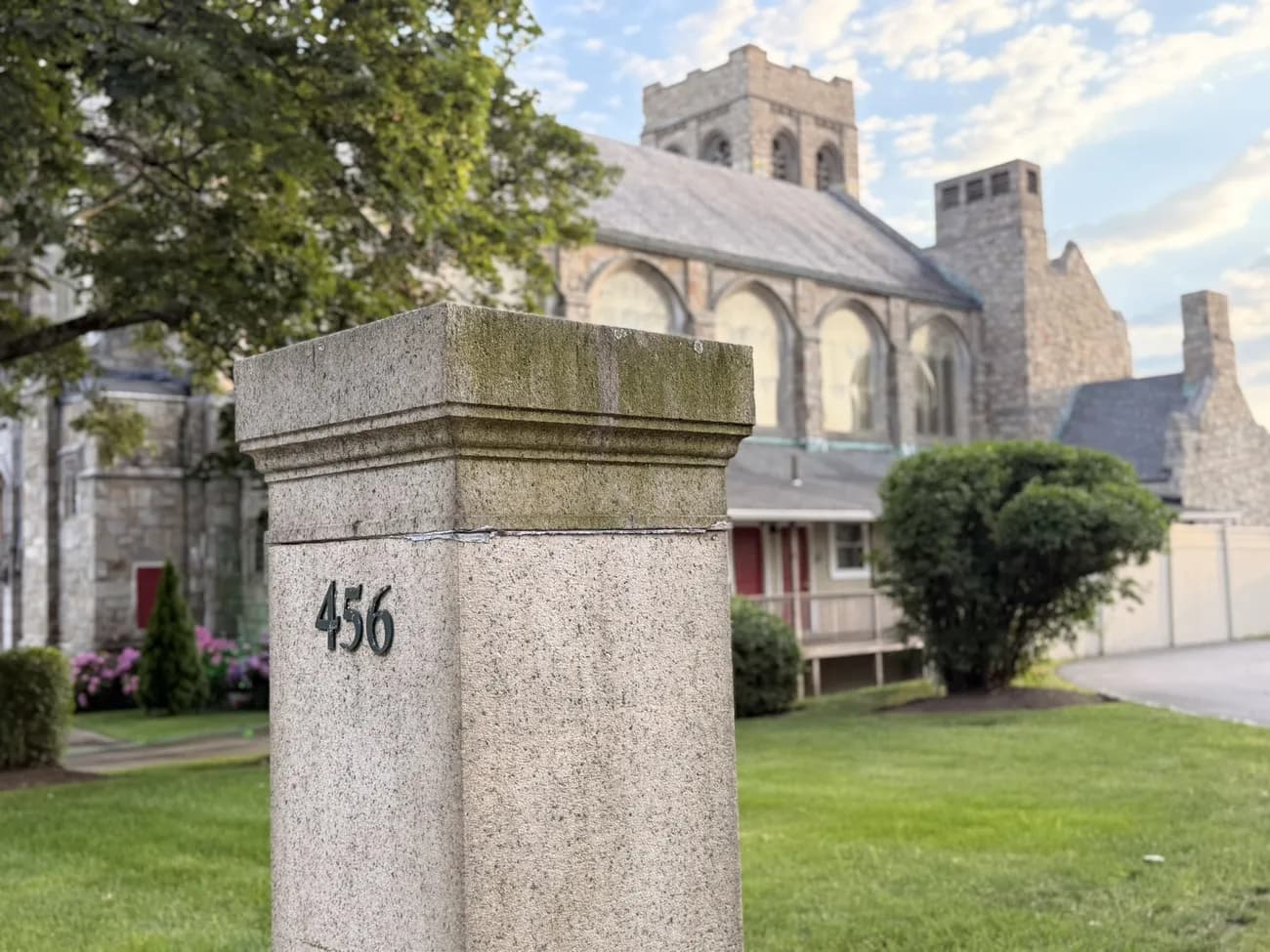
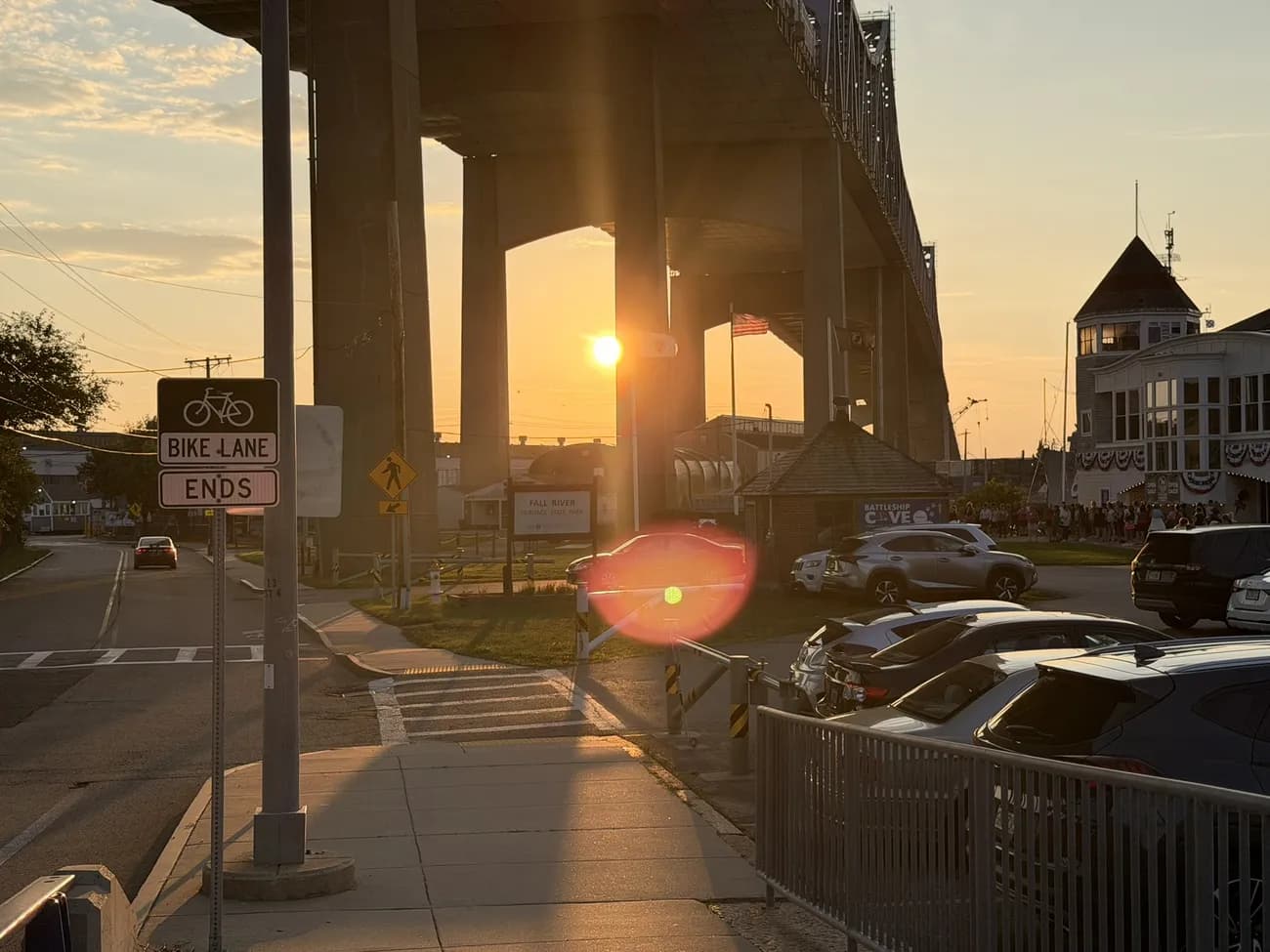
A 2.5 MB photograph comes out the other side somewhere around 150 to 250 KB, and on a webpage you will not be able to tell the difference. For reference, the 155 Fall River photographs in Avalon's own library have a median file size of 192 KB. Every photo in this article is one of them. I would not publish this piece any other way.
Step 3. Swap them in. In whatever runs your site, delete the old image and upload the new one in its place. Same photo, same crop, same everything, minus roughly nine tenths of the bytes.
Step 4. Re-run step 1. You want to see the number move. It will.
That is the entire fix. No developer, no invoice, no migration, no new platform.
What a Westport business should do Monday morning#
In order, cheapest first:
- Run PageSpeed Insights on your homepage, on Mobile. Two minutes, free. You cannot fix a number you have never seen.
- Resize every image over 500 KB. About five minutes for the first photo while you learn the tool, under two minutes each after that. Free.
- Call your own business from a phone, using the number on your own website. Then check that number against your Google Business Profile. Twenty-two percent of the sites I could check had a mismatch. Five minutes, free, and it is the cheapest lost-revenue leak on this list.
- Check that your phone number on the site is tappable, not typed as plain text. Twenty-eight percent of sites in the archive fail this. Five minutes for whoever maintains the site.
- Add a contact form, if you do not have one. Just under half the live sites I measured carry no contact form at all, which means the only route in is the phone. Site A has no form either. An hour of somebody's time.
- Add online ordering or booking, if it fits your trade. Seventy-seven percent of live sites in the archive offer none. This is the only item on the list that is a real project rather than an afternoon.
Items one through four are free and, for a homepage with a handful of photos, add up to well under an hour. If you do nothing else from this article, do those.

What I could not measure#
Stating this plainly is part of the method.
- Real-visitor field data for the Westport pharmacy. Google does not have enough traffic on that domain to report a 28-day field measurement, so the 34.4-second figure is a lab measurement under Google's standard simulated mobile conditions. It is a consistent one: five runs produced 33.6, 33.6, 34.4, 34.7 and 34.8 seconds.
- The performance score itself was volatile across those runs, between 42 and 71, which is why I am leading with LCP rather than the headline score. LCP barely moved. The score does.
- The site's certificate chain. My checker could not validate it, but that traces to my own machine's certificate store not yet carrying a very new root, not to anything the site is doing wrong. I am recording it as unmeasured rather than as a failure, because reporting it as a failure would be wrong.
- Google Business Profile data and review counts for anything measured this week. The Places API returned an authorisation error for the whole of this run, so review totals, ratings and the name-address-phone cross-check are missing for both sites I measured on September 8. The 22% mismatch figure comes from the 214 businesses in the earlier archive where that check did succeed.
- Social posting frequency, anywhere. I detect that accounts are linked. I do not measure how often anybody posts.
- Anything on Facebook or Instagram. Neither can be verified from a server: Facebook returns an error for real and fake pages alike, and Instagram returns success for handles that do not exist. Any tool that tells you otherwise is guessing.
The honest summary of Westport in 2026#
The businesses are excellent. The reviews are real and they are extraordinary. The websites are, in most cases, built competently by someone who knew what they were doing.
And then somebody uploaded photographs straight off a camera, and the page that takes 3.7 seconds on a desktop started taking 34.4 on a phone, and nobody told them, because 39% of the live sites in this archive have no analytics at all and therefore no way of finding out.
That is not a failure of care. It is a failure of anybody ever mentioning it. So: consider it mentioned.
If you want a second pair of eyes on your own numbers, or you would rather someone just fixed the images and the phone number and handed it back working, that is the sort of thing I do. No pitch, no retainer conversation required.
Joshua Amado, Avalon Partner — 774.559.8992 · Joshua.Amado@AvalonPartner.com
Filed under
Want help putting this into practice?
Avalon Partner helps Fall River and South Coast businesses fix the gaps that cost them leads. Call 774.559.8992 or email Joshua.Amado@AvalonPartner.com.